
Samniya Avionics Techsys Pvt. Ltd. delivers comprehensive Independent Verification & Validation (IV&V), Verification, Testing, and Certification Support for safety-critical avionics and defence software in accordance with RTCA DO-178C/DO-178B, supporting Design Assurance Levels (DAL A to E).
Key Aspects
DO-178C/DO-178B Independent Verification & Validation (IV&V)
Independent Verification & Validation (IV&V) of safety-critical Avionics Software in compliance with DO-178C/DO-178B for Design Assurance Levels A, B, C, D & E.
Complete Software Verification Life Cycle
Complete Software Verification Life Cycle covering Planning, Requirements-Based Testing, Reviews, Traceability, Coverage Analysis, and Certification Support.
UAV & Flight Control Software Verification
IV&V and software verification for UAV/Drone Flight Control Systems, including Navigation Systems, Autopilot, Mission Computers, Flight Management Systems, Landing Gear Controllers, Payload Management Systems, and Ground Control Stations.
Cockpit Display Systems Verification
Verification & Validation of Cockpit Display Systems, Multifunction Displays (MFD), Primary Flight Displays (PFD), Engine Indication & Crew Alerting Systems (EICAS), and Helicopter Display Units.
Automated Test Benches & HIL/SIL Development
Development of Automated Test Benches, Hardware-in-the-Loop (HIL), Software-in-the-Loop (SIL), and Test Rigs for Flight Control Computers and Avionics Subsystems.
Dynamic & Static Software Verification
Dynamic and Static Software Verification using industry-leading tools in accordance with DO-178C/DO-178B, DO-330, and project-specific certification requirements.
Mission-Critical Embedded Software IV&V
Independent Verification & Validation of Mission-Critical Embedded Software for Military Aircraft, Fighter Aircraft, Helicopters, UAVs, eVTOL Platforms, Radar Systems, Naval Systems, and Defence Electronics.
Requirements Engineering & Formal Verification
Requirements Engineering, Requirements Verification, and Formal Requirement Analysis using model-based and formal verification methodologies.
Embedded Control Systems Verification
Verification of Antenna Control Units (ACU), Servo Control Systems, Actuator Controllers, and Embedded Control Software.
Requirements-Based Testing & Coverage Analysis
Requirements-Based Testing (RBT), Low-Level & High-Level Requirements Verification, Structural Coverage Analysis (Statement, Decision & MC/DC), Data & Control Coupling Analysis, and Source Code Analysis.
Software Verification Tool Expertise
Expertise in verification tools including LDRA, Rapita RVS, VectorCAST, Tessy, IBM Rational Test RealTime (RTRT), Cantata, Parasoft C/C++test, Polyspace, and other certification-qualified toolchains.
Certification Artefacts Preparation & Review
Preparation and review of certification artefacts including PSAC, SDP, SVP, SQAP, SCI, SAS, SVR, Configuration Indexes, Traceability Matrices, and Certification Liaison Data.
FADEC & DECU Software Verification
Independent Verification & Validation of Digital Engine Control Software (FADEC/DECU) in accordance with DO-178C/DO-178B.
Aircraft Software Certification Support
Software Verification and Certification Support for commercial aircraft platforms, regional aircraft, helicopters, business jets, UAVs, and advanced air mobility (AAM/eVTOL) platforms.
Navigation Software Verification
Verification & Validation of Satellite Navigation, GNSS, INS/GPS Integrated Navigation, and Mission Navigation Software for aerospace and defence applications.
Radar & Defence Systems IV&V
IV&V of software for Radar Systems, Electronic Warfare (EW), Communication Systems, Mission Computers, Weapon Management Systems, and Naval Combat Systems.
Software Quality Assurance & Configuration Management
Software Quality Assurance (SQA), Configuration Management (CM), Problem Reporting & Corrective Action (PRACA), and Certification Compliance Support throughout the software development life cycle.
FAA, EASA & Defence Certification Support
End-to-end support for FAA, EASA, CEMILAC, DGAQA, DRDO, HAL, BEL, ADA, ISRO, and OEM certification programmes through rigorous verification, validation, and compliance activities.
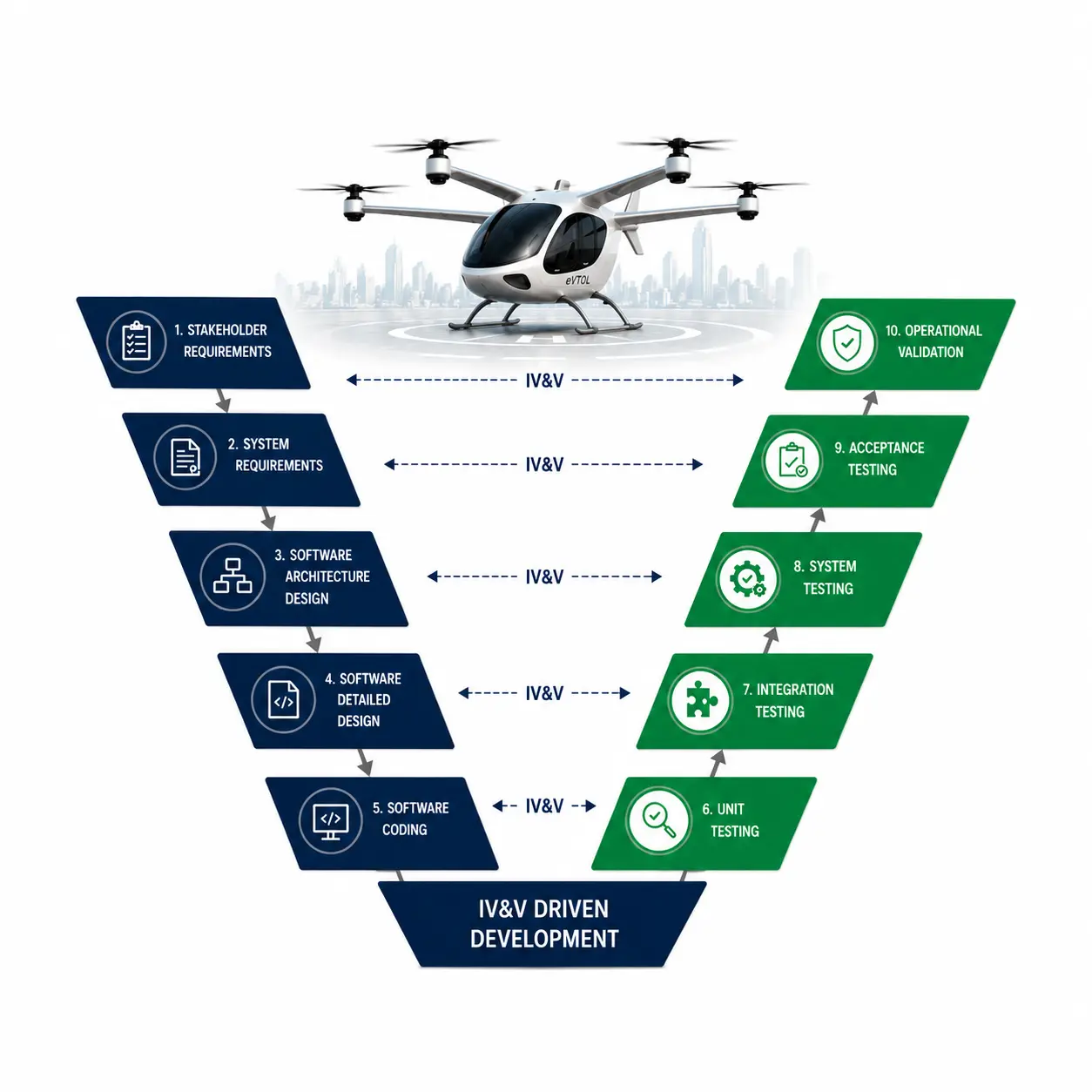
Standards & Compliance
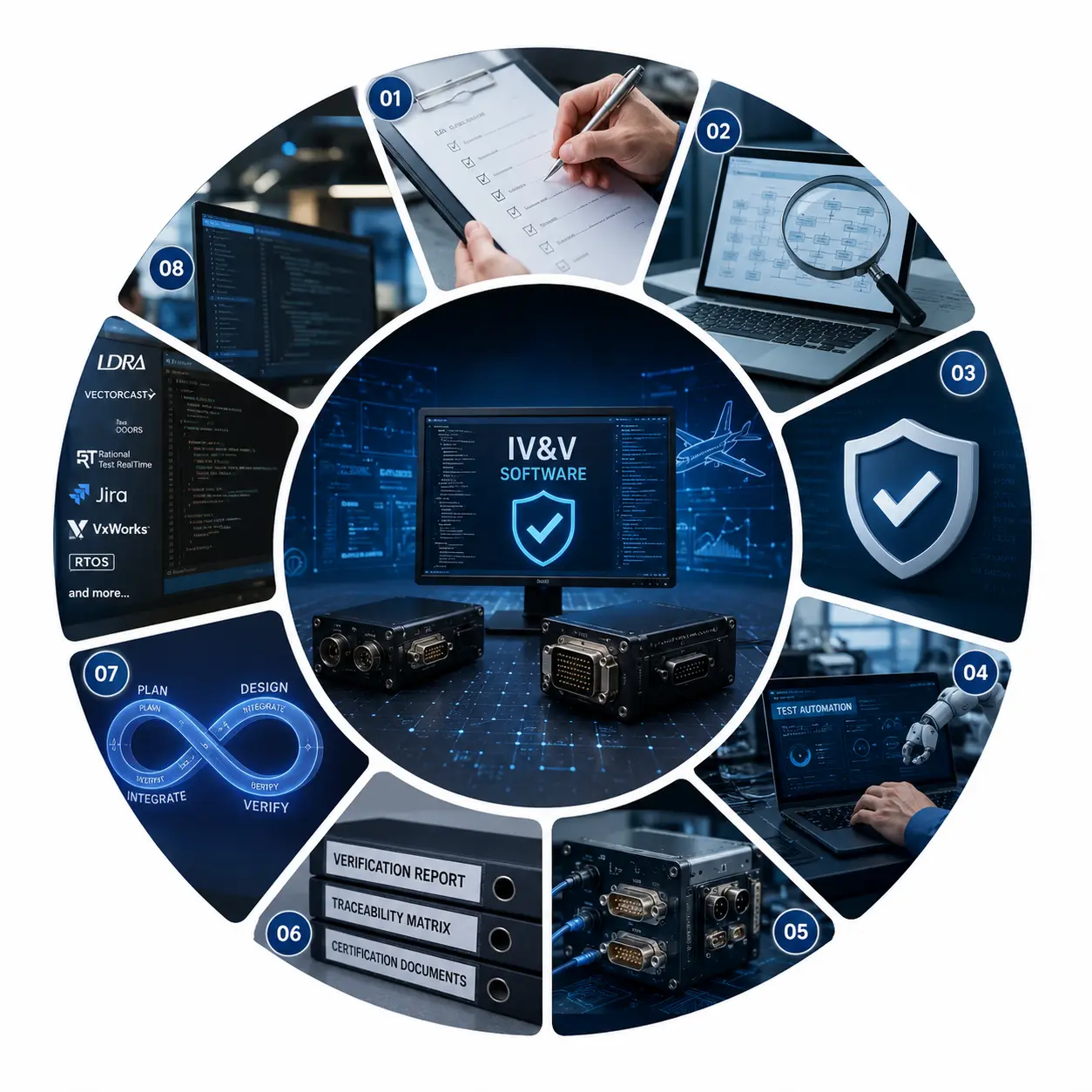
We ensure rigorous compliance, complete certification traceability, and independent assurance across all design assurance levels to support safe and certifiable avionics software deployments.
Benefits of Partnering with Us
Get in Touch
Join Avionics and be part of the elite community shaping the future of aerospace innovation.